Torpedo Alley Dive Site
Komodo, Indonesia · Near Labuan Bajo
Overview
Torpedo Alley is Komodo's muck diving secret, a site that bears almost no resemblance to the current-swept pinnacles and manta stations the park is famous for. Located in the sheltered southern section near Horseshoe Bay, this black sand slope is where you go when you want to forget about big stuff and spend an hour crawling across the bottom with a macro lens looking for things smaller than your thumb.
The name comes from torpedo rays (electric rays) that rest on the dark volcanic sand here, partially buried and easily overlooked until your guide's pointer tap directs your attention to the faint outline in the substrate. They're not dangerous unless you're stupid enough to touch one, but the charge they deliver will ruin your day. Several species occur here, from small marbled electric rays to larger torpedo rays that span half a metre across.
The dive site is a gently sloping sand and rubble bottom that descends from about 5 metres to 30 metres, with scattered coral bommies breaking up the monotony. It looks unpromising from above. Under the surface, it looks like not much either, at first. The magic at Torpedo Alley is in the detail. This is a site where you need to slow down, look small, and trust your guide's critter-finding instincts.
The cold, nutrient-rich upwellings that feed the southern Komodo sites create conditions perfect for an unusual assemblage of critters. Species that muck diving enthusiasts travel to Lembeh Strait or Anilao to find appear here in Komodo, a park primarily known for big-animal encounters. It's an unexpected dimension to the park's diving that many visitors never discover because the liveaboard itineraries prioritise the headline sites in the north.
Visibility can be challenging. The dark sand and particulate-laden water sometimes reduce vis to 5 metres, which is actually fine for muck diving (your working distance is centimetres, not metres) but claustrophobic for divers accustomed to Komodo's typically clear conditions.
Marine Life at Torpedo Alley
Torpedo rays are the namesake attraction, marbled electric rays and larger torpedo species resting on or partially buried in the black sand. Your guide will know their favourite resting spots, but they do move around, so each dive requires fresh searching. Handle with eyes only. The electric charge is a defensive mechanism and not something you want to test.
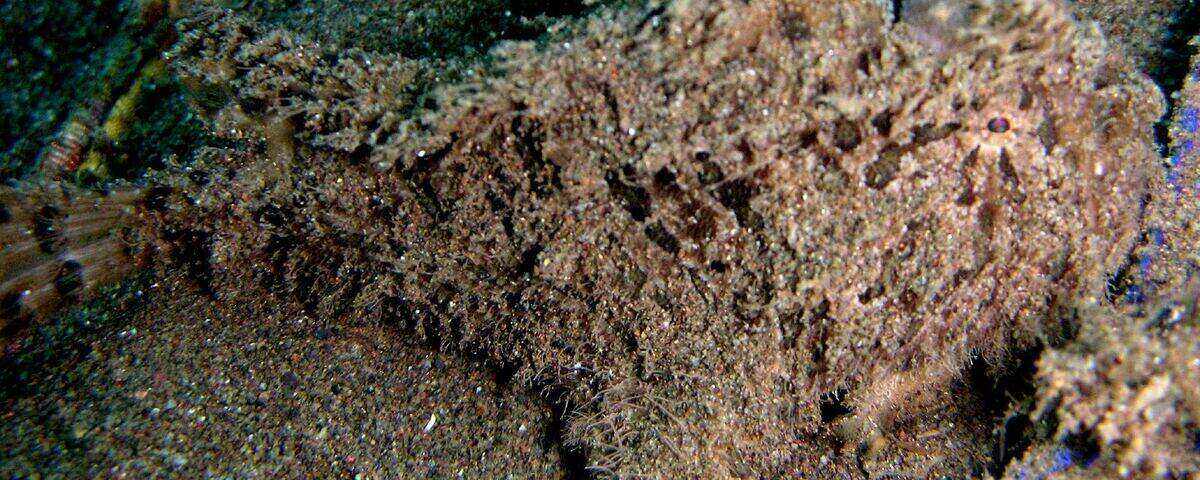
Frogfish are regularly found here, in various colours from black (perfectly camouflaged on the dark sand) to bright yellow and orange (sitting on sponges where they blend better than you'd expect). Warty frogfish and painted frogfish are both reported. Their sedentary ambush hunting style means once your guide locates one, it'll likely be in the same spot for days.
The sand and rubble host a parade of macro subjects. Flamboyant cuttlefish display their psychedelic colour patterns while walking across the substrate on modified arms. Wonderpus and mimic octopus have been documented at the site, though sightings are less reliable than at dedicated muck diving destinations. Seahorses (thorny seahorses and common seahorses) cling to sparse coral and debris.
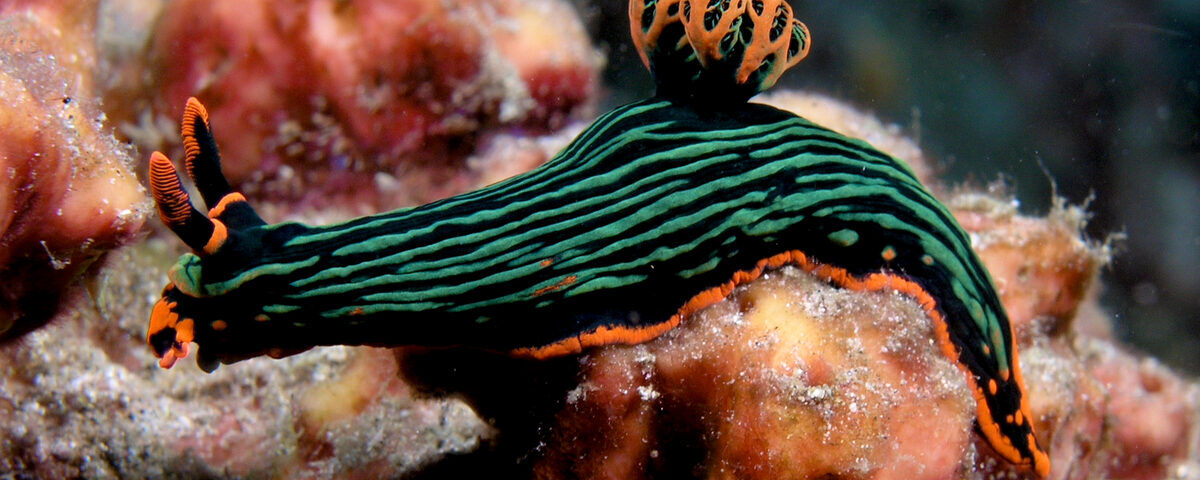
Nudibranchs are abundant across the site. The dark substrate makes colourful species stand out, and patient searching reveals dozens of individuals on a single dive. Ghost pipefish hover near sea whips and debris, their leaf-like camouflage effective until movement betrays them. Mantis shrimp inhabit burrows throughout the sandy areas, their colourful eyes peeking from the entrance.
Bobbit worms lurk in the sand, their iridescent jaws emerging to ambush passing prey with startling speed. These are among the more unsettling creatures on the reef, and watching a strike is both fascinating and slightly horrifying. The sandy areas between bommies also harbour snake eels, stargazers, and various species of flatfish that rely on camouflage to avoid predation.
The rubble zones between the coral bommies harbour decorator crabs, spider crabs, and various species of hermit crab. These crustaceans are easily overlooked by divers focused on the headline species, but they add to the total diversity count and provide photographic subjects for patient macro shooters. The diversity of invertebrate life here rivals that of more famous muck diving destinations in Lembeh and Ambon.
Dive Conditions
Torpedo Alley sits in the sheltered southern section of Komodo National Park, protected from the strong tidal currents that define the northern sites. Current here is typically mild, rarely more than a gentle drift along the sand slope. This makes for comfortable muck diving where you can hover motionless over a subject for minutes at a time.
The defining condition is temperature. The cold upwellings that enrich this area bring water temperatures of 24 to 28 degrees, sometimes colder. Combined with the lower visibility (5 to 15 metres) and dark sand, the atmosphere here feels very different from the bright, warm dives in the north.
Visibility is the lowest of any commonly dived Komodo site, typically 5 to 15 metres. The dark volcanic sand absorbs light rather than reflecting it, and the nutrient-rich water carries particulate matter. For muck diving, this is irrelevant since your focus is on subjects within arm's reach, but wide-angle photography is limited.
The sand slope descends gradually without walls or drop-offs, making depth management straightforward. Most of the interesting critters are found between 8 and 20 metres, so there's no need to push deep. Entry is by boat, with a gentle descent to the sand.
This site suits intermediate divers with good buoyancy control. Muck diving demands that you hover millimetres above the sand without stirring it up, which requires more refined skills than following a drift dive along a wall. Photographers especially need precise buoyancy to get close to subjects without disturbing the substrate.
⚓ Divemaster Notes
Torpedo Alley is the site that muck diving addicts didn't know existed in Komodo. When I tell guests we're doing a muck dive in the national park, the looks of confusion are priceless. Everyone comes to Komodo for mantas and current-swept pinnacles, and then I drop them on a black sand slope and watch them find frogfish and flamboyant cuttlefish.
Buoyancy is everything here. If you can't hover without touching the sand, you'll obliterate the visibility for everyone behind you and likely scare off every critter within 5 metres. I assess buoyancy on an easier site first and only bring divers to Torpedo Alley if they can maintain position without fin contact.
Use a pointer stick to stabilise yourself on the sand rather than using your hands (which disturb more sediment). Two fingers on the stick, resting lightly on firm sand, gives you the stability for macro photography without the destruction.
The torpedo rays are usually on the east side of the slope between 12 and 18 metres. They move around, but my hit rate is about 80 percent when I search that area systematically. Never touch them. The electric charge won't kill you but it hurts, and it's bad practice besides.
Don't rush through this dive looking for the highlight reel species. The magic is in the accumulation of small finds. A nudibranch here, a mantis shrimp there, a perfectly camouflaged scorpionfish that took you three passes to spot. Slow down and let the sand reveal its secrets.
The night dive at Torpedo Alley transforms the site completely. The nocturnal cephalopod community emerges in force: bobtail squid glow under UV torchlight, flamboyant cuttlefish hunt across the sand, and the torpedo rays themselves become more active, cruising the sandy slope in search of prey. If your operator offers night diving in the southern park, this is the site to request.
How to Get to Torpedo Alley
Torpedo Alley is in the southern Komodo National Park area near Horseshoe Bay, roughly 3 to 4 hours by boat from Labuan Bajo. It's typically dived as part of a southern Komodo day trip or, more commonly, from a liveaboard anchored in Horseshoe Bay.
The site pairs with Cannibal Rock and Yellow Wall of Texas, all located in the same bay area. Liveaboards typically spend a full day or more in the southern section, diving all three sites across multiple dives.
Labuan Bajo is the departure point, with flights from Bali (about 1 hour). Park entrance fees apply.
Gear Recommendations
5mm wetsuit for the cold southern water. Macro lens (60mm or 100mm equivalent) is essential. Dual macro strobes with snoots for creative lighting on critters. Focus light for guide spotting and autofocus assistance. Pointer stick for stabilisation. No reef hook needed. No SMB needed for the sheltered conditions, though carrying one is always sensible.
Recommended Dive Operators
The best Torpedo Alley experiences come from operators whose guides specialise in critter finding. Wunderpus Liveaboard (named, appropriately, after the wonderpus octopus) has guides with sharp eyes for macro subjects. The Arenui liveaboard caters to photographers and includes Torpedo Alley on their southern routes. Blue Marlin Komodo runs occasional southern trips with experienced guides.
Liveaboard Options
Torpedo Alley is accessed primarily via liveaboard, given its distance from Labuan Bajo. It appears on southern Komodo itineraries alongside Cannibal Rock and Yellow Wall of Texas. The Wunderpus, Samambaia, and Arenui all include it, with the Arenui particularly suited to photographers targeting macro subjects. Some dedicated photo trip liveaboards offer multiple dives at the site over a single day.